
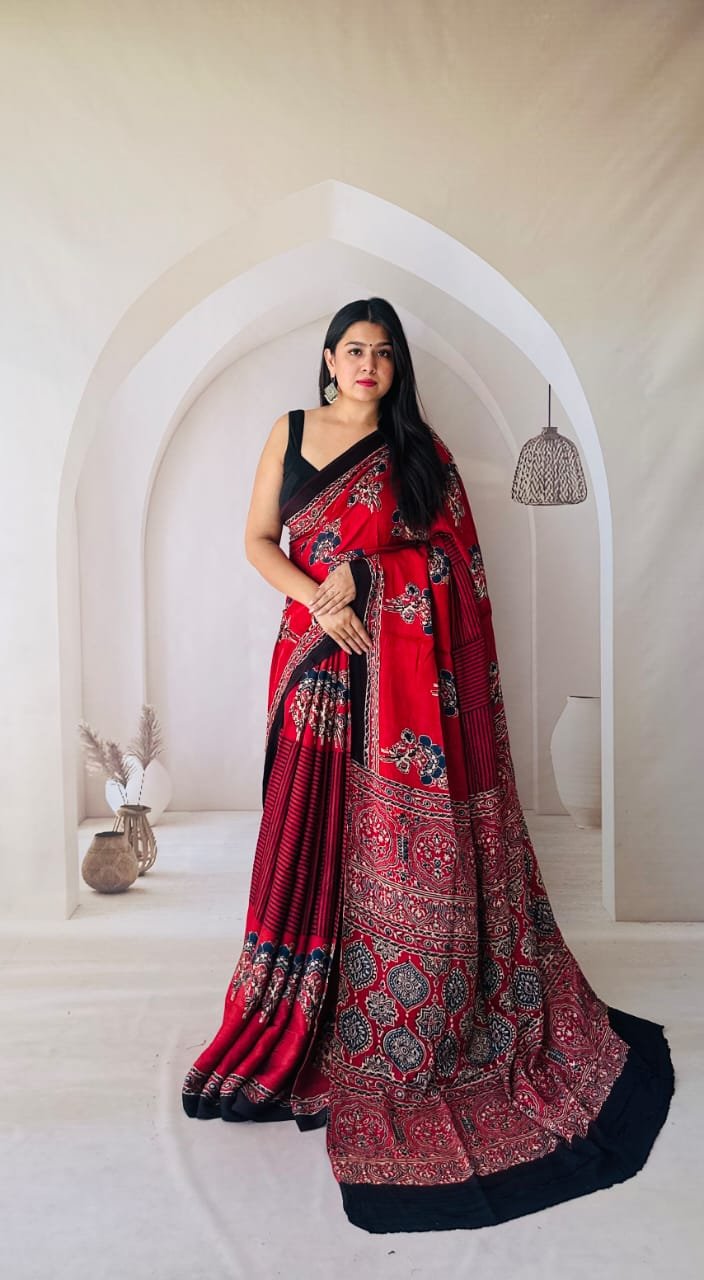
In the vast and colorful tapestry of Indian textiles, few traditions shine as brightly and boldly as Ajrakh printing. Originating from the arid landscapes of Kutch in Gujarat and the Sindh region of Pakistan, Ajrakh is more than a fabric—it’s a living story, passed down through generations of skilled artisans. Its deep indigo hues, geometric motifs, and labor-intensive processes have made Ajrakh not only a textile but a symbol of heritage, identity, and sustainable fashion.
What is Ajrakh Printing?
Ajrakh printing is a traditional block-printing technique known for its rich natural colors and complex symmetrical patterns. The word “Ajrakh” is believed to come from the Arabic word azrak, meaning blue, reflecting the dominant indigo shade used in these textiles. Characterized by intricate floral and geometric designs, Ajrakh is printed on cotton and silk fabrics using hand-carved wooden blocks.
Each Ajrakh textile is a masterpiece—often taking 16 to 20 painstaking steps and up to two weeks to complete. From washing and dyeing to block printing and drying, every stage of the process is manual, requiring extraordinary precision and patience.
The Origins and Cultural Significance of Ajrakh
Ajrakh printing has its roots in the Indus Valley Civilization, making it one of the oldest textile traditions in the world. For centuries, it has been practiced by the Khatri community, particularly in villages like Dhamadka and Ajrakhpur in Gujarat. These artisans have safeguarded the craft, blending age-old techniques with modern-day innovations.
Traditionally, Ajrakh was used to make turbans, lungis, and shawls worn by men in Kutch. It also holds cultural and spiritual significance—Ajrakh motifs are often inspired by Islamic geometry, reflecting balance, order, and the universe’s infinite nature. Today, it’s embraced by contemporary designers and consumers alike, celebrated for its artisanal value and eco-conscious approach.
The Intricate Process of Making Ajrakh
What sets Ajrakh apart is its complex, multi-step process that relies on natural dyes and resist-printing techniques. Here’s a simplified breakdown:
1. Pre-washing the Fabric
The cotton or silk is first washed to remove starch, oils, and impurities. This ensures that the dyes can penetrate deeply and evenly.
2. Mordanting
The fabric is soaked in a solution of natural mordants like myrobalan (harad), which helps fix the dye. This step is crucial for color retention and intensity.
3. Block Printing with Resist Paste
Artisans use hand-carved wooden blocks to apply a resist paste made from lime, gum, and clay. These areas resist dye and help form the base of the design.
4. Indigo Dyeing
The cloth is dipped in natural indigo dye vats. Only non-resisted areas absorb the indigo, creating a dramatic contrast of blue against uncolored zones.
5. Washing and Sun Drying
After dyeing, the fabric is washed and laid out to dry under the sun. Sunlight helps enhance the brilliance of natural dyes.
6. Repeating for Multiple Colors
The process is repeated with different resist pastes and natural dyes like madder red, iron black, and turmeric yellow. Each layer adds depth and detail to the final design.
The entire journey from raw fabric to finished Ajrakh textile is labor-intensive and time-consuming, but it’s this dedication to craftsmanship that makes each piece truly unique.
Sustainability at the Heart of Ajrakh
In an age dominated by fast fashion and synthetic materials, Ajrakh stands out as a beacon of sustainability. Here’s why:
- Natural Dyes: Ajrakh uses plant-based dyes like indigo, madder, turmeric, and pomegranate, which are biodegradable and non-toxic.
- Zero Waste: Artisans recycle water, repurpose dye residues, and avoid synthetic chemicals.
- Ethical Craftsmanship: Ajrakh supports rural artisans and ensures fair wages, helping preserve ancestral knowledge and rural livelihoods.
By choosing Ajrakh, you’re not just wearing a fabric—you’re supporting a slow fashion movement rooted in heritage, harmony, and environmental consciousness.
Ajrakh in Contemporary Fashion
Once limited to traditional attire, Ajrakh has now found a place in modern fashion wardrobes across the globe. Designers and conscious consumers are blending Ajrakh prints into:
- Sarees and kurtas
- Dresses and skirts
- Scarves and stoles
- Jackets and trousers
- Home décor items like cushion covers and table runners
The versatility of Ajrakh lies in its timeless patterns and earthy color palette, making it perfect for both casual and festive wear. It beautifully bridges the gap between tradition and modernity, appealing to fashionistas, minimalists, and sustainability advocates alike.
How to Care for Your Ajrakh Garments
To ensure the longevity and brilliance of your Ajrakh pieces, follow these care tips:
- Hand wash separately using mild, pH-neutral detergents
- Avoid direct sunlight when drying, as it may fade the colors
- Do not bleach or tumble dry
- Iron on reverse side on a low setting
With the right care, your Ajrakh garments can last for years, becoming softer and more beautiful with time.
Where to Buy Authentic Ajrakh
Looking for genuine, handcrafted Ajrakh prints? Choose platforms and brands that work directly with artisan clusters in Kutch or Sindh. Online marketplaces like Pure Desi, Okhai, Fabindia, and Jaypore offer authentic Ajrakh apparel and home textiles. Supporting these brands ensures your purchase uplifts the hands that made it.
Final Thoughts: A Living Legacy Worth Wearing
Ajrakh printing is not just a craft—it’s a cultural treasure, carrying the wisdom, stories, and artistry of generations. In a world that’s increasingly turning to mindful and ethical choices, Ajrakh is a beautiful reminder of India’s rich textile heritage and the power of handmade craftsmanship.
So the next time you drape an Ajrakh dupatta or wear an Ajrakh kurta, know that you are wrapped in history, art, and the love of countless artisans who believe in beauty that lasts.


Leave a comment